Group of Colonial Decorations Awarded to an Administrator in Indochina
850,00 €
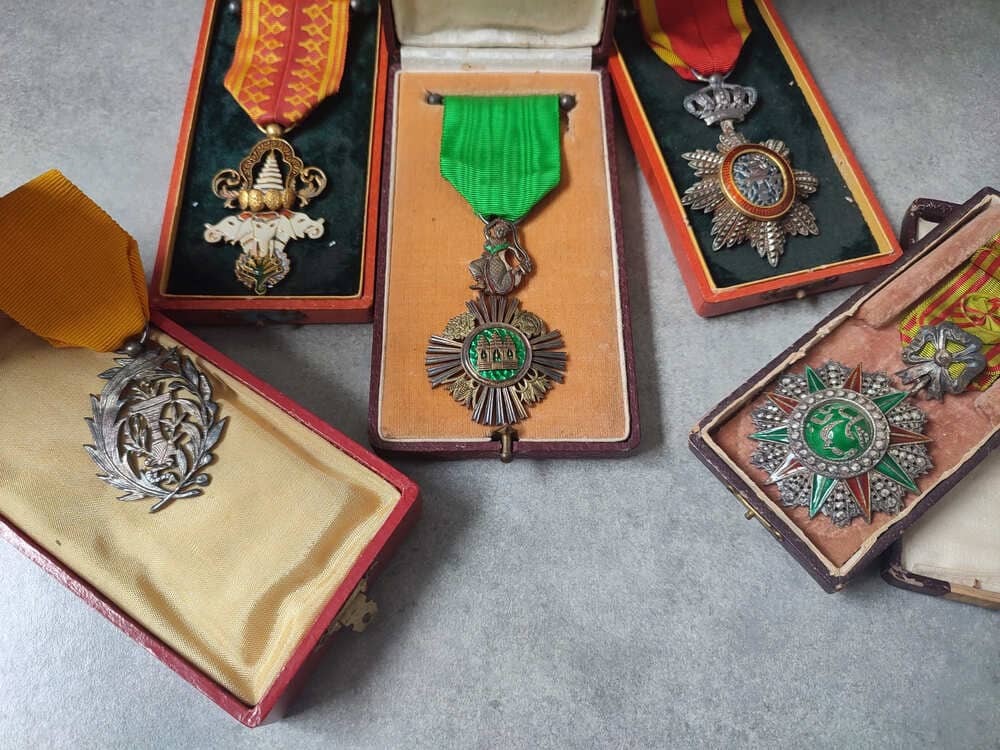
Group of five colonial orders awarded to Jean-Louis Bicail. Born in Tunis on 2 November 1909 and deceased in Le Tholonet on 18 April 1991, he graduated from the School of Political Sciences and held a law degree. He completed his military service from 15 October 1933 to 15 October 1934 before becoming a reserve interpreter officer in the French Air Force.
He joined the Civil Service of Indochina as a clerk on 8 July 1937 and was appointed Assistant Administrator on 1 January 1940. After the war, he continued his career within the Civil Service of Indochina and was promoted to Second Class Administrator on 1 January 1948.
His personal archival file bears the mention “Political Internee”. As the file is not available online, the exact circumstances of this internment remain unknown. Several hypotheses may be considered, the most likely being internment by the Japanese authorities following the coup d’état of 9 March 1945 in Indochina.
According to testimony passed down by his family, Jean Bicail was tortured during his captivity and suffered from lasting damage to his feet for the rest of his life. According to his family, he subsequently continued his administrative career in Dahomey after his time in Indochina.
Further research would undoubtedly be worthwhile, particularly to clarify the circumstances of his internment and his role during the turbulent years of the Second World War in Indochina.
The group consists of:
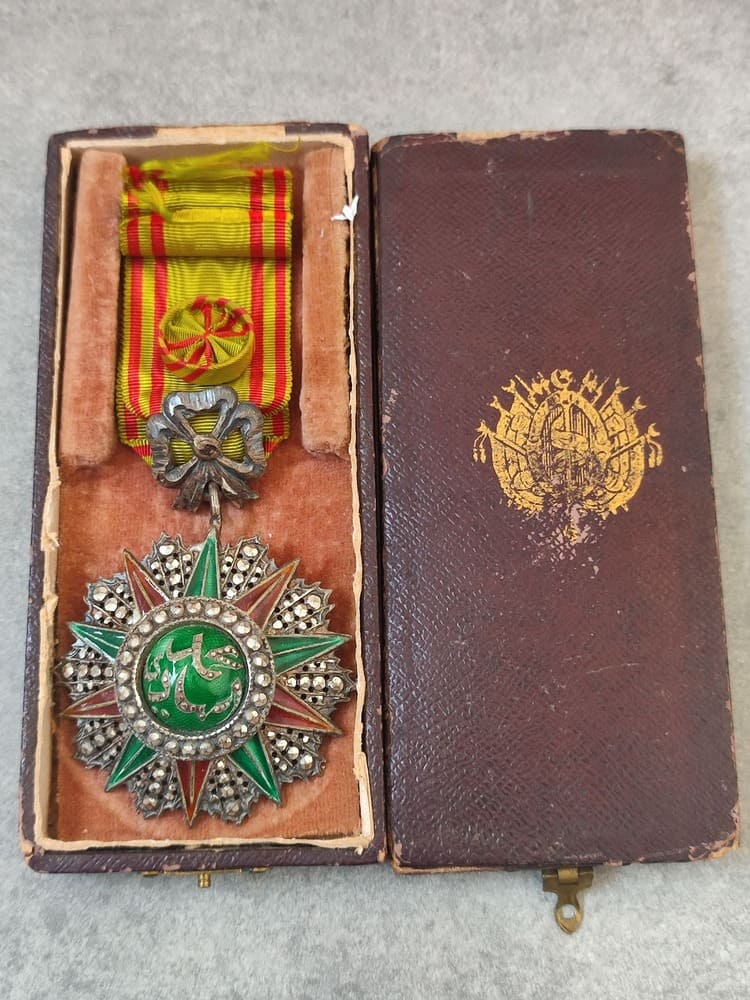
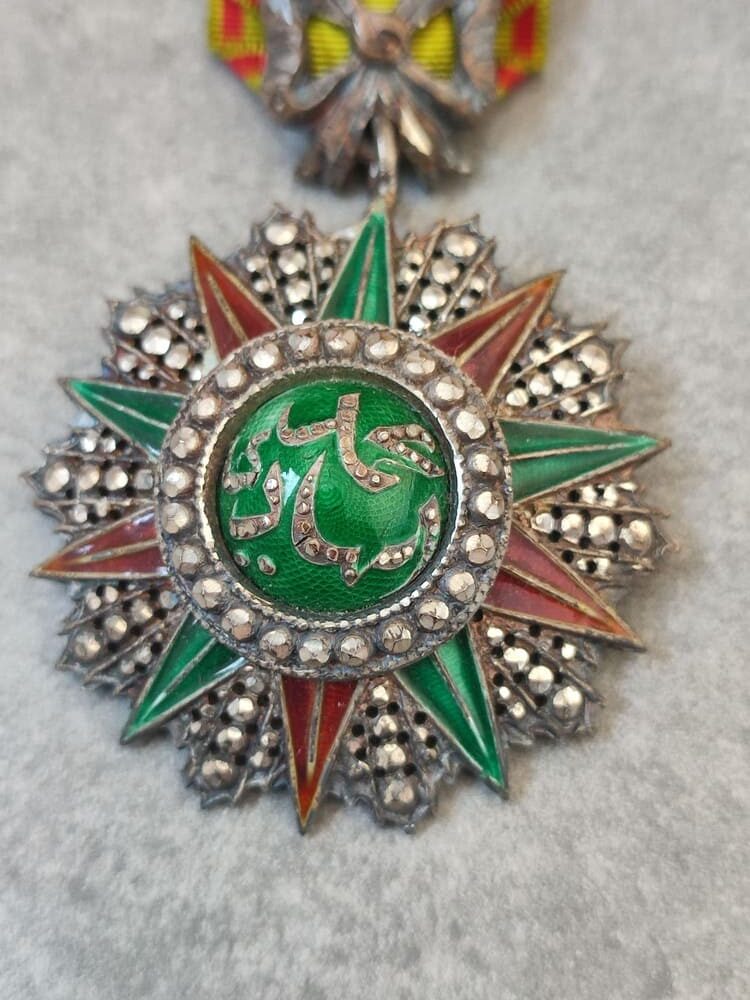
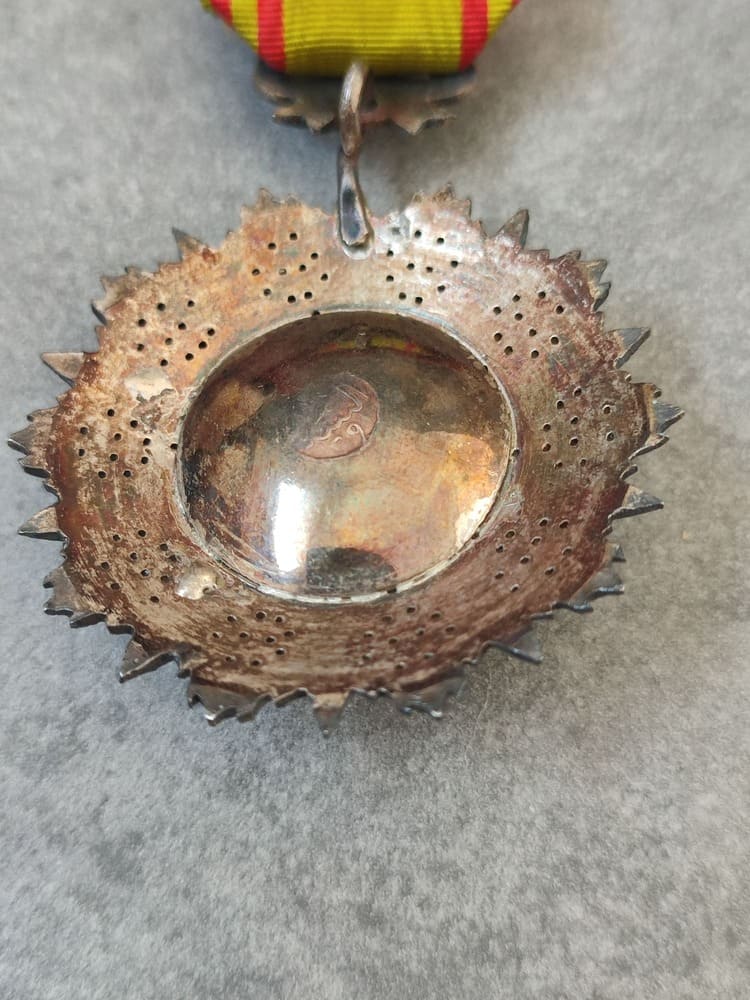
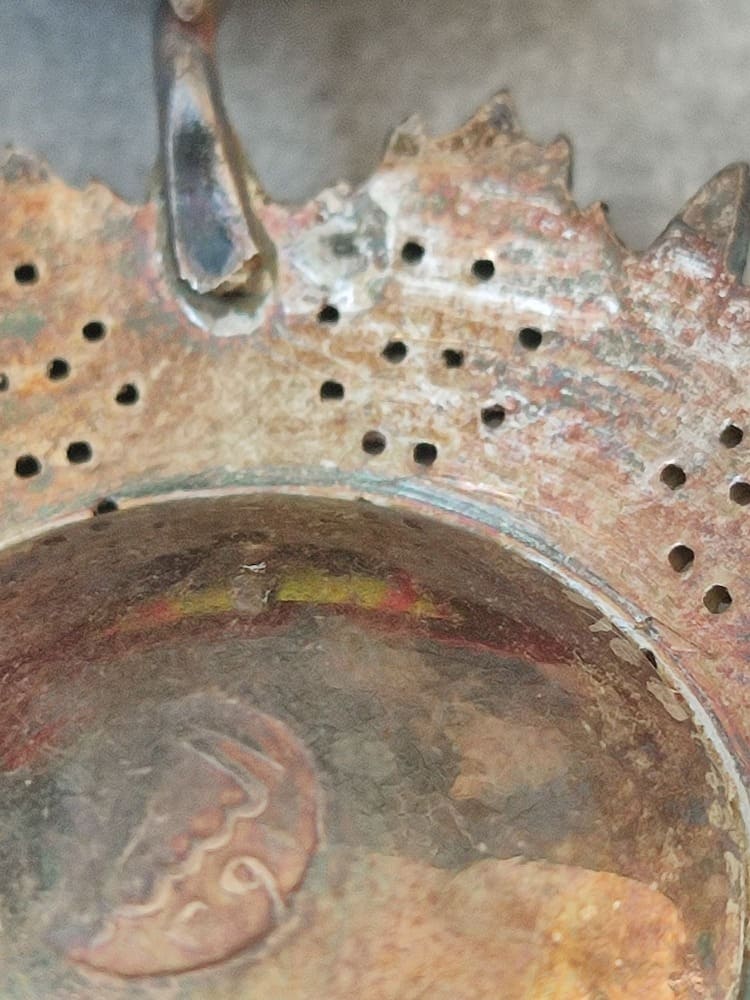
– Tunisia: Order of Nichan Iftikhar (Order of Glory), Officer.
Ten-pointed star with ten enamelled branches. The centre bears the monogram of Muhammad El Hadi Bey (1902–1906) in green enamel. Local manufacture with the Tunis Mint hallmark on the reverse. Housed in its original case, unfortunately damaged. The lid is detached due to the loss of the hinge.
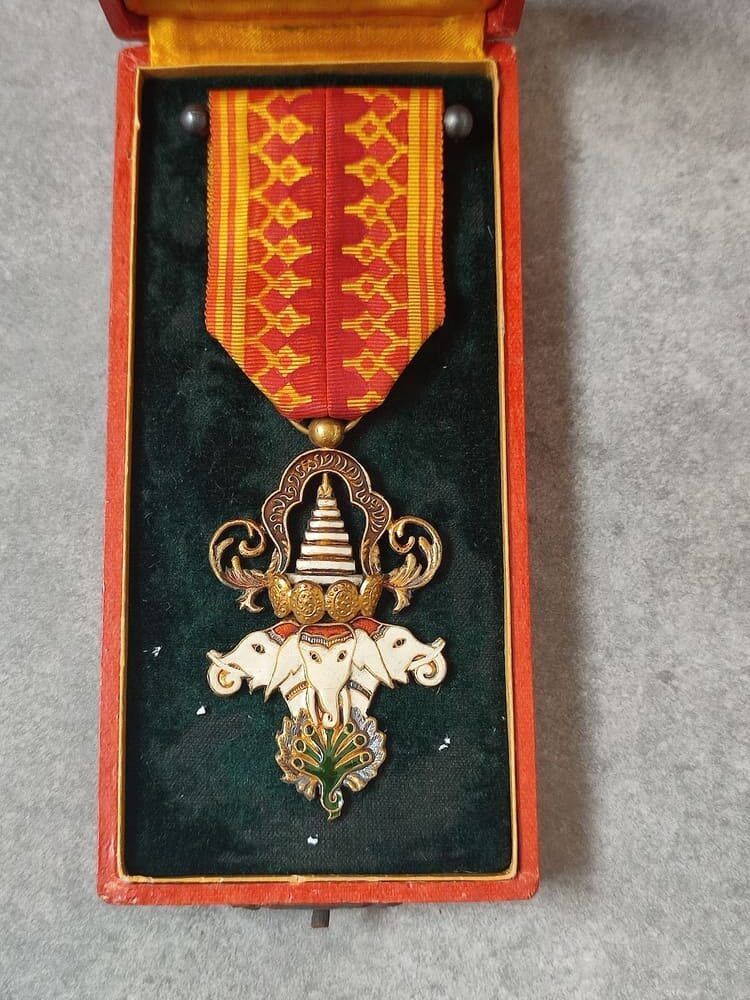
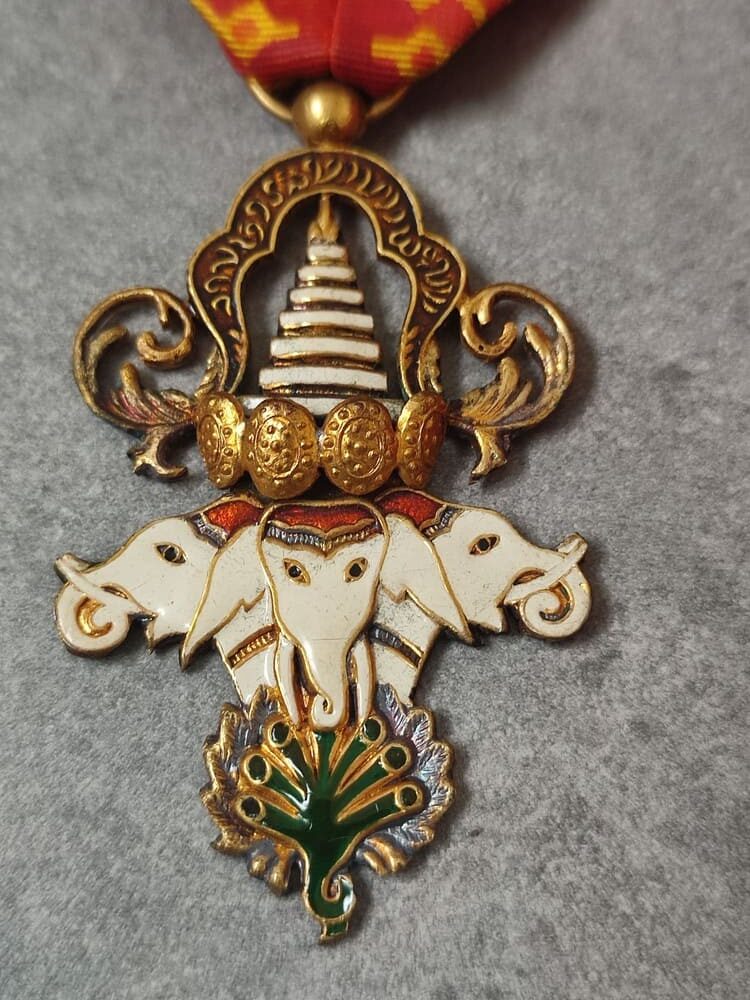
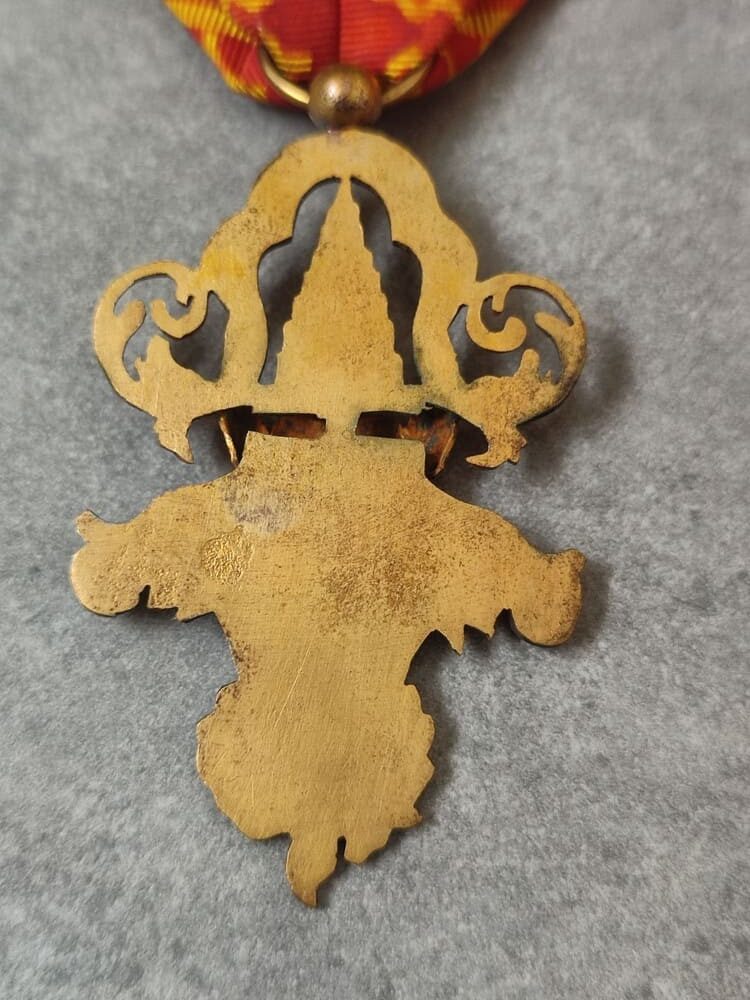
– Laos: Order of the Million Elephants and the White Parasol, Knight.
Awarded for civil and military merit contributing to the development of the Kingdom and devotion to it.
The obverse depicts a white three-headed elephant (Erawan), the foreheads adorned with red cloths. Beneath appears a golden laurel wreath surrounding a stylized green peacock tail. Above stands a seven-tiered white royal parasol, separated from the central composition by four oblong golden shields. The whole is surmounted by a red scroll bearing the Lao inscription “Lan Sang Hom Khao Luang Prabang”, meaning “The Million Elephants and the White Parasol of Luang Prabang”. This motto refers to the historical heritage of the Kingdom of Luang Prabang and the ancient Kingdom of a Million Elephants.
Order in its original case.
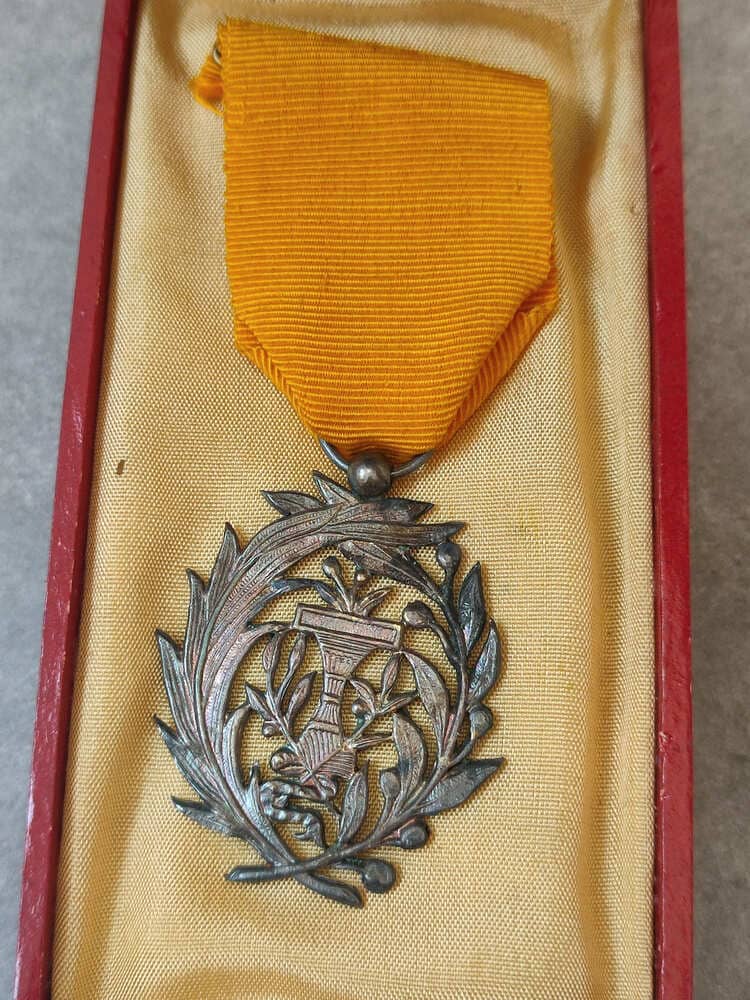
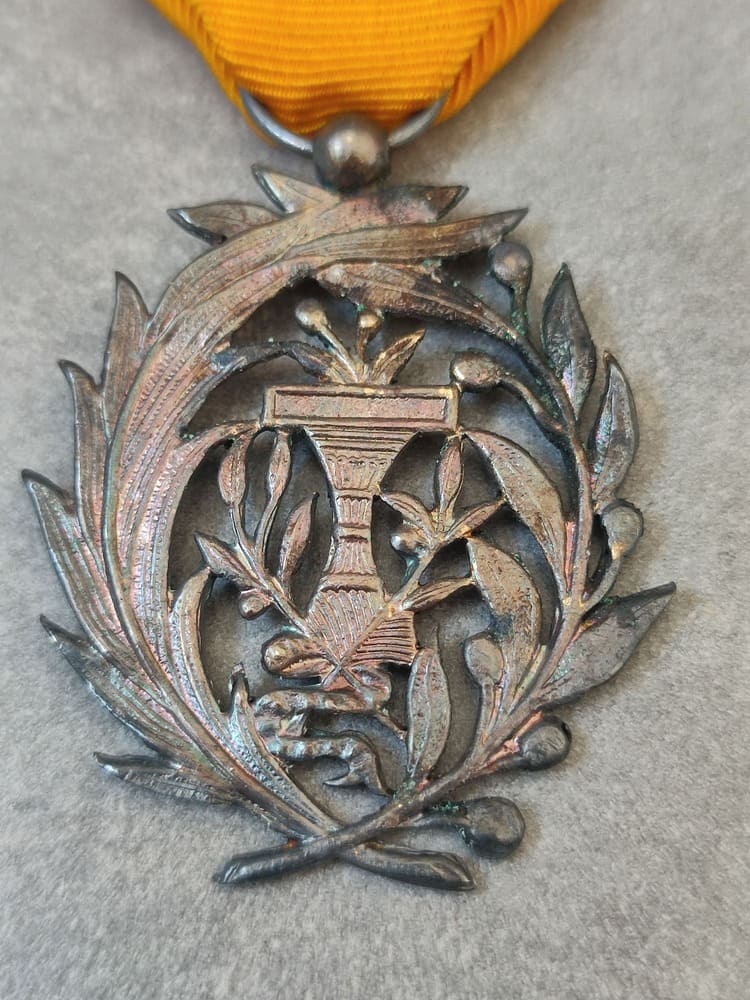
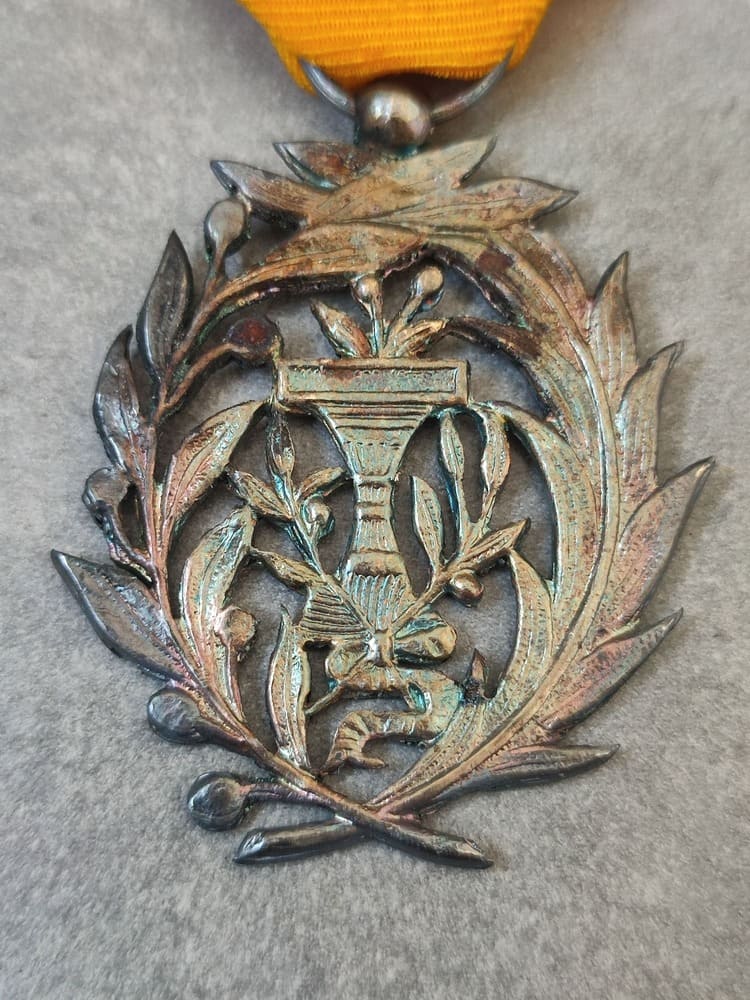
– Cambodia: Royal Order of Monisaraphon, Knight.
The badge consists of a wreath formed by palm leaves on one side and laurel leaves with berries on the other, enclosing a cup surmounted by a closed book. Badge without its original case.
Created on 1 February 1905 by Royal Ordinance, this order was intended to reward Cambodians and foreigners who distinguished themselves in the fields of education, science, literature, and the arts.
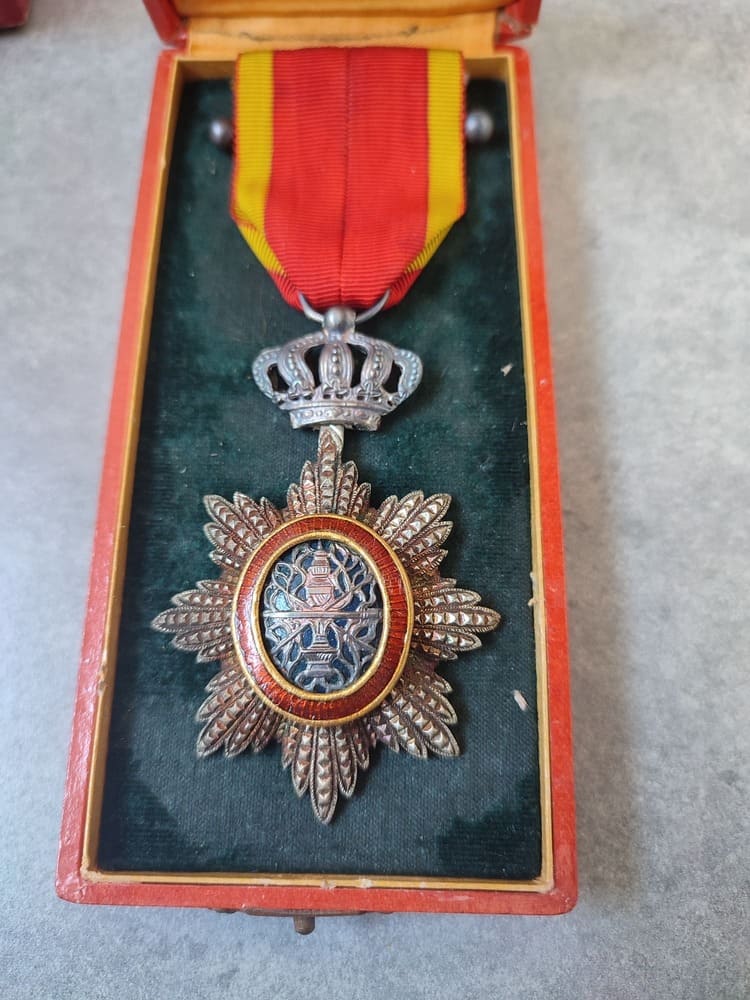
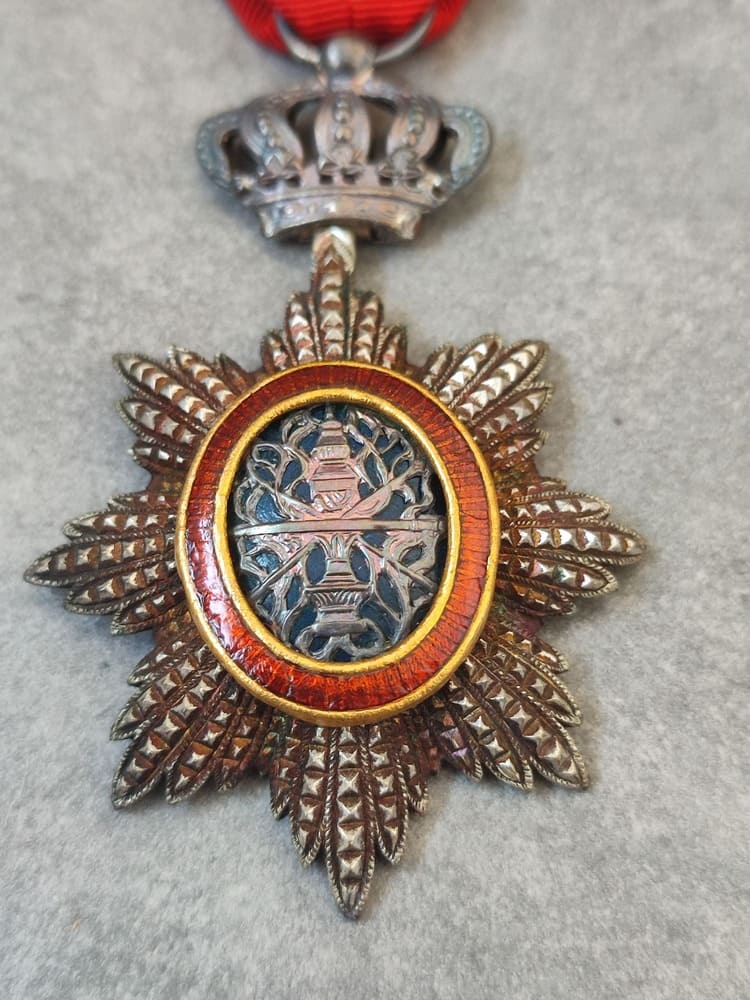
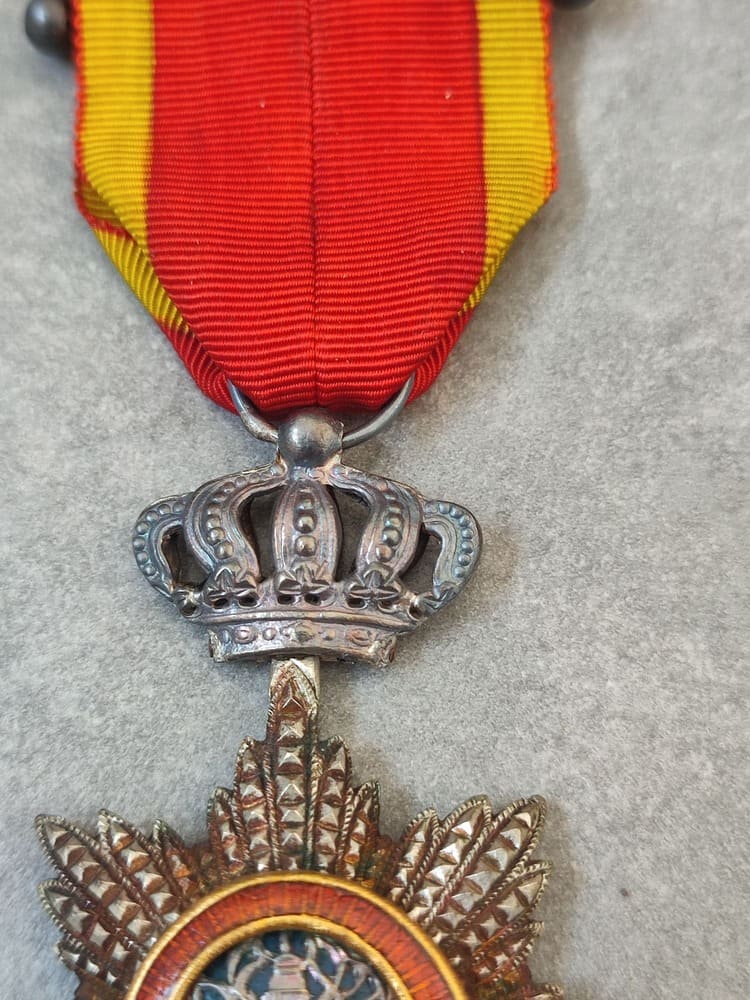
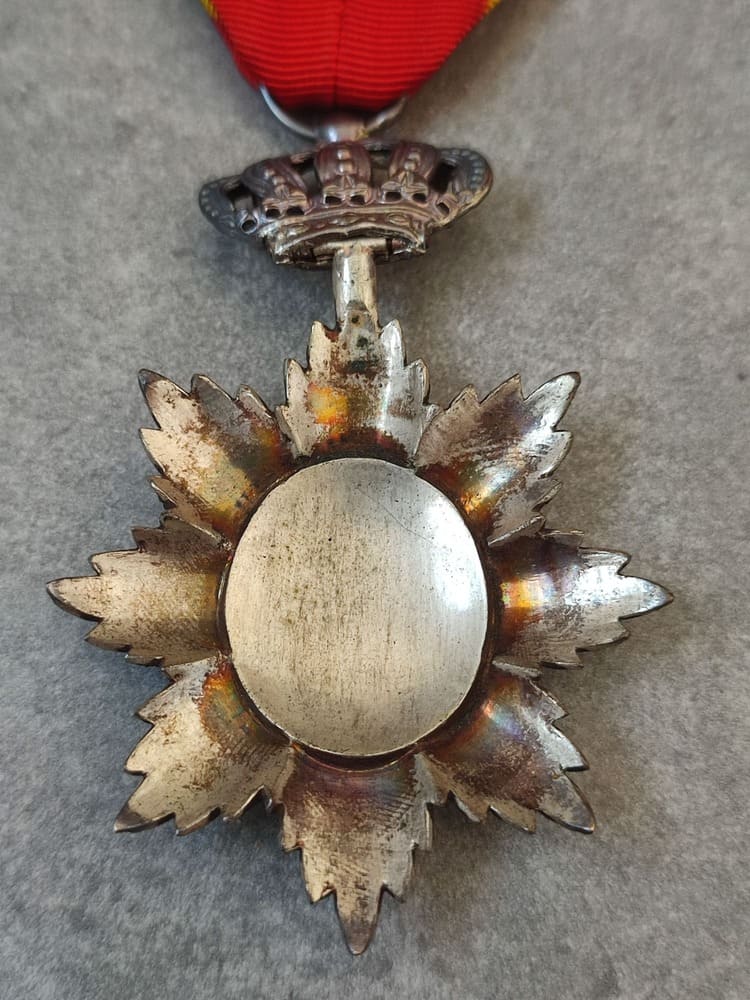
– Cambodia: Royal Order of Cambodia, Knight.
The obverse consists of an oval blue enamel medallion bearing the royal arms in gold: a cup, a horizontal sword and the royal crown. It is surrounded by a red enamel ring and mounted on an eight-pointed star with faceted rays.
Order in its original case.
Created in 1864 by King Norodom I, the Royal Order of Cambodia was awarded to civilians and military personnel, Cambodian or foreign, who rendered distinguished services to the Kingdom of Cambodia. During the French Protectorate period, it was also awarded to civil servants, officers and soldiers who served with distinction in French Indochina.
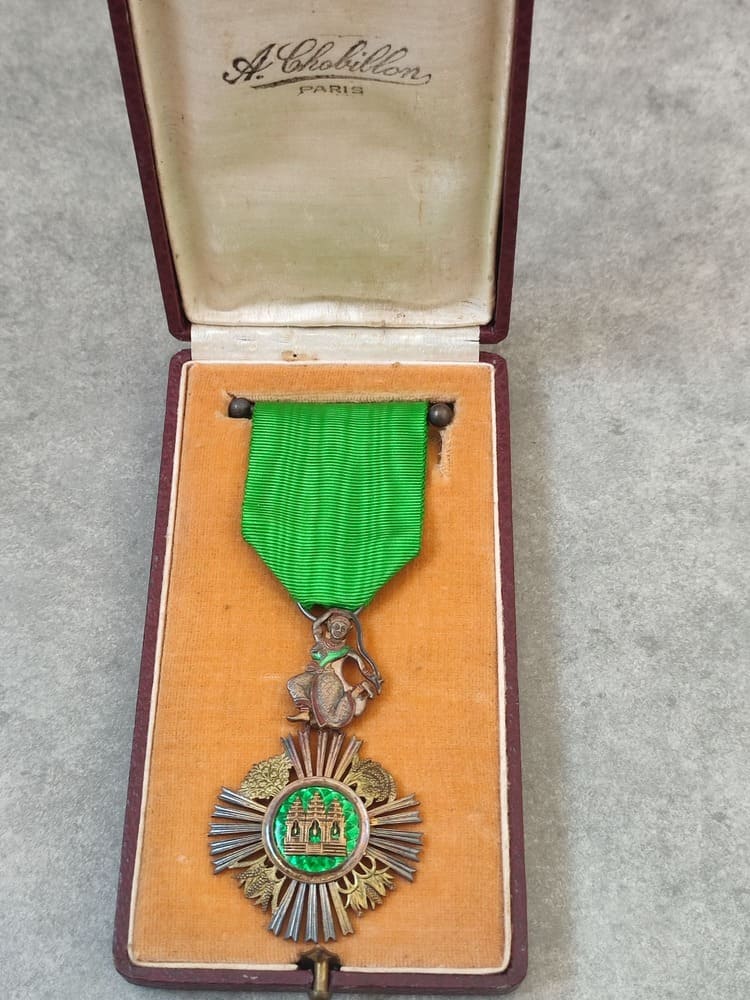
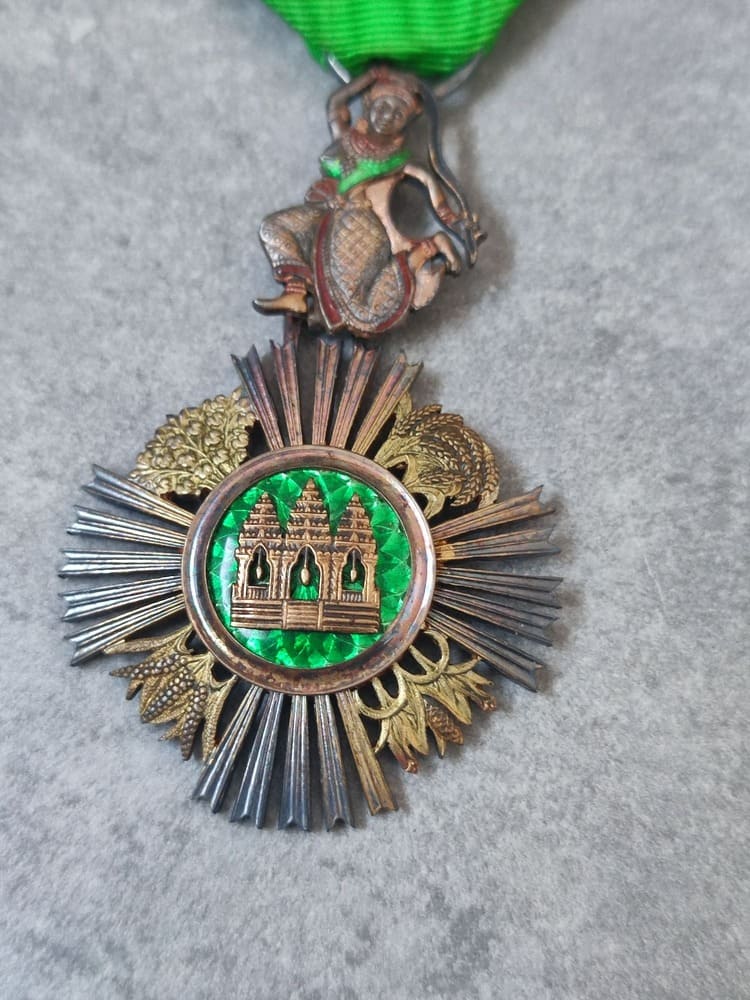
– Cambodia: Royal Order of Sowathara, Knight.
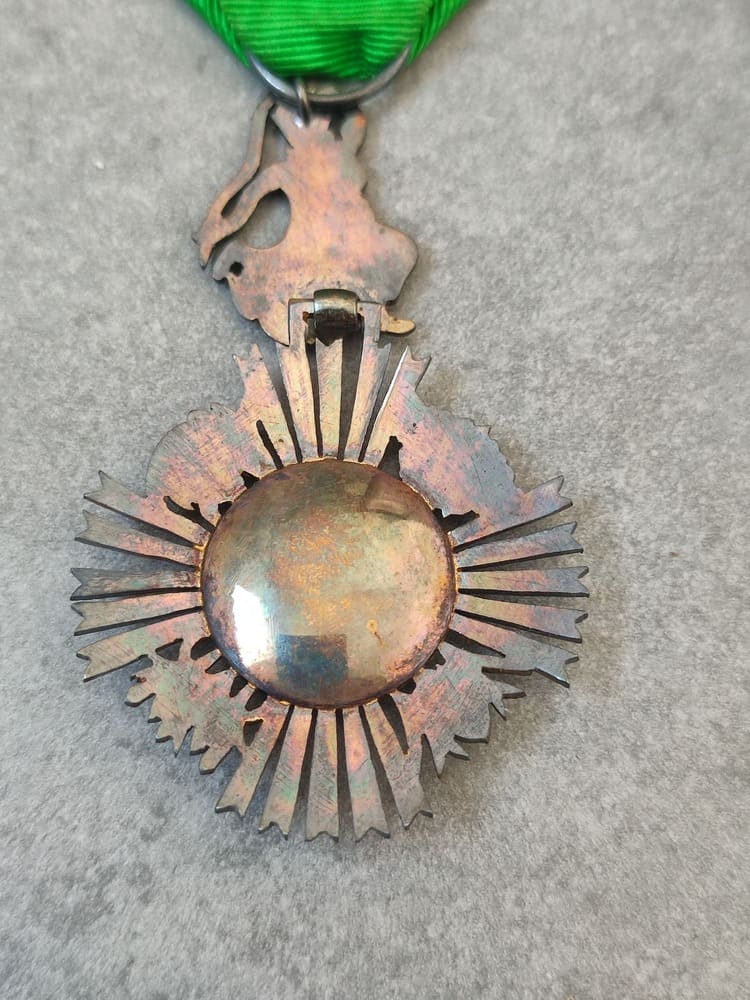
The obverse features a green enamel disc bearing in gold the three-towered pavilion of Angkor Wat. The medallion is surrounded by four groups of five equal rays, slightly forked at their ends. Between these groups appear sheaves of maize, cotton, rice and palm leaves respectively. The decoration is suspended from a representation of the Earth Goddess wringing her hair.
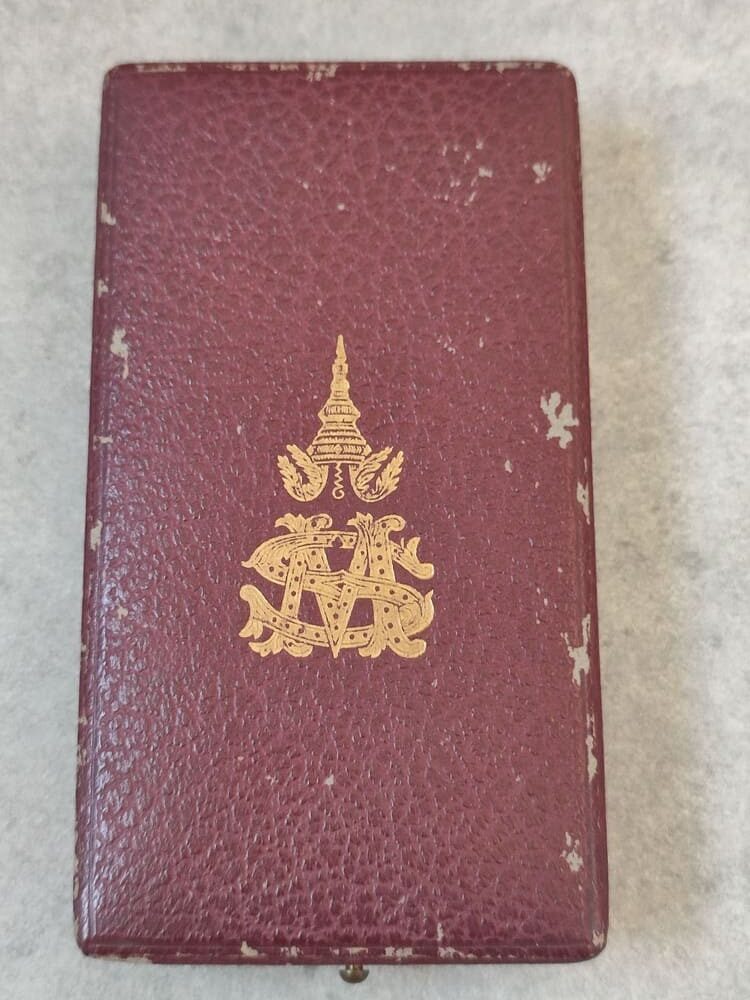
Apple-green ribbon. Housed in its original Chobillon of Paris case. Clasp incomplete.
Condition: Overall good condition.