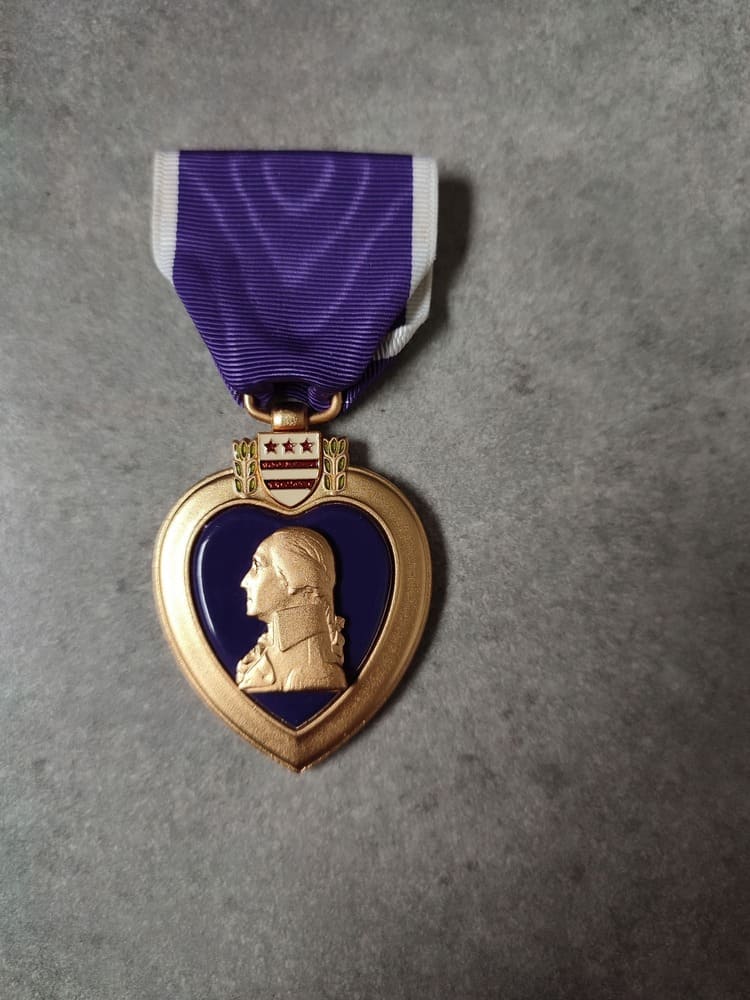
Purple Heart of a Glider Troops Soldier, Battle of the Bulge and Rhineland Campaign
300,00 €
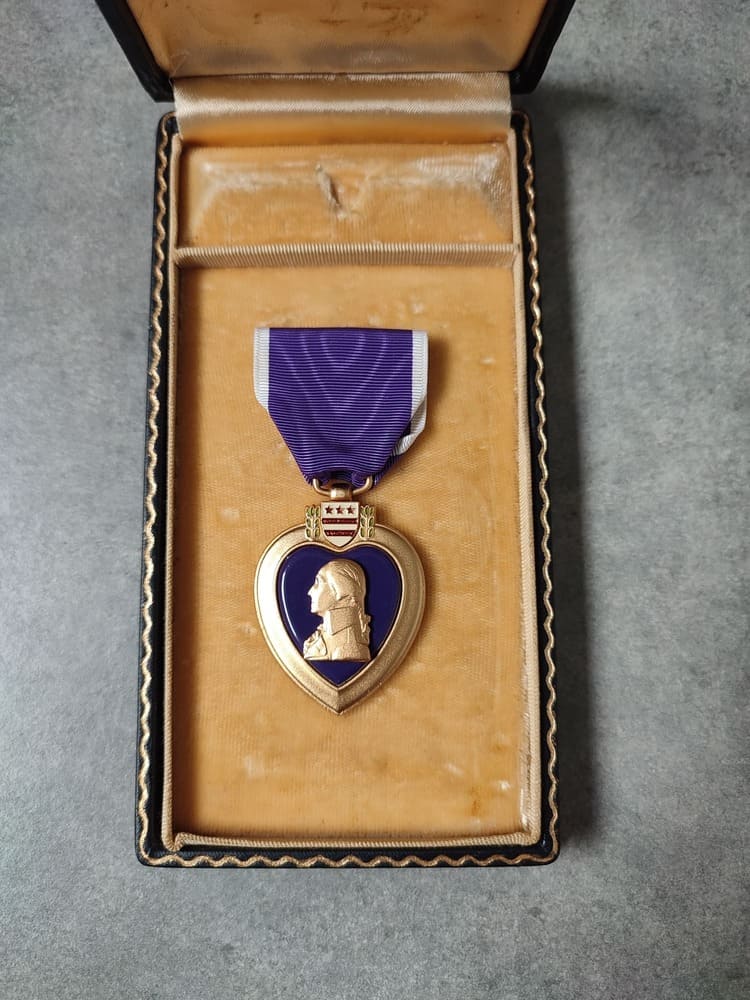
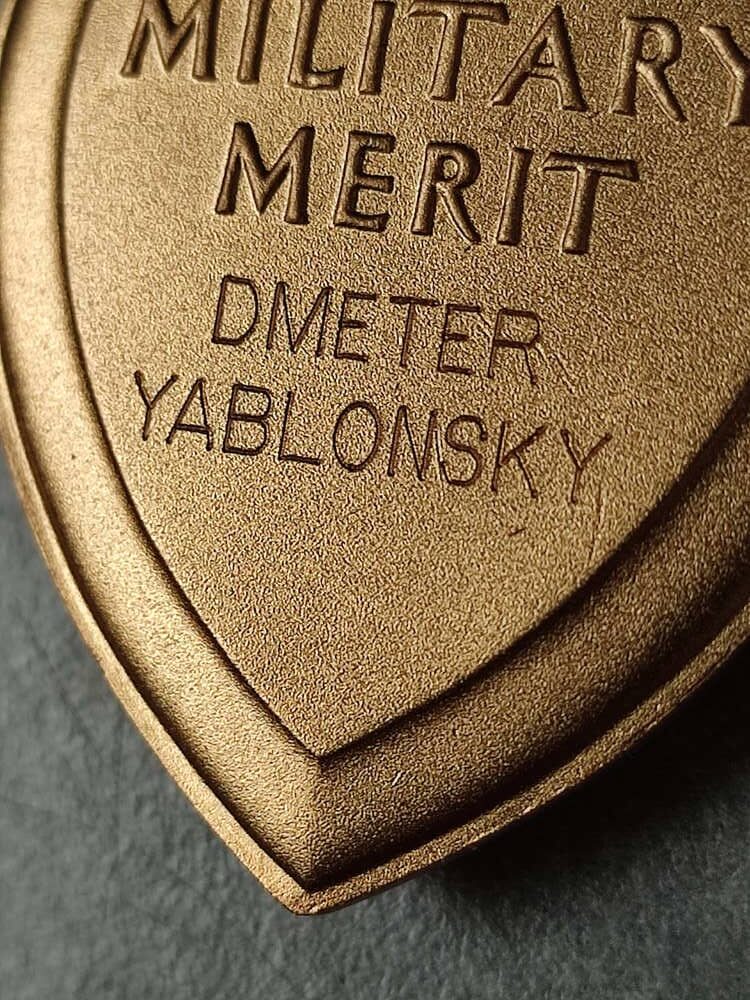
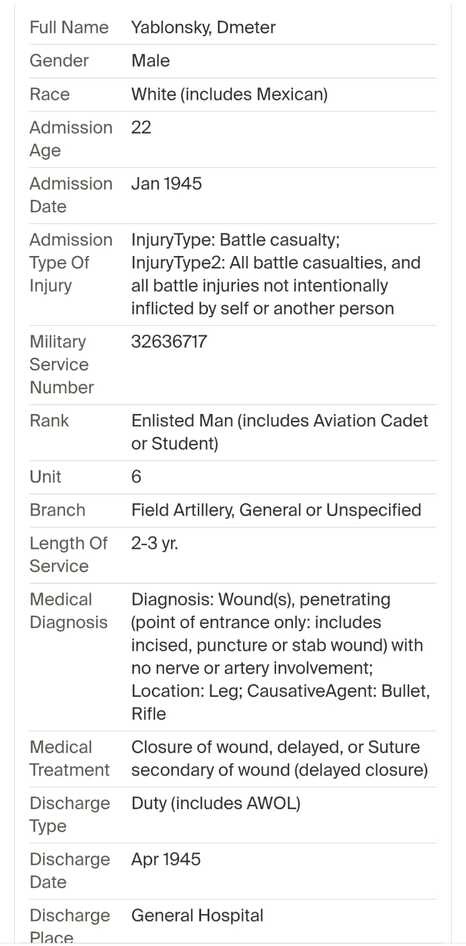
Purple Heart awarded to Dmeter Yablonsky, a young 22-year-old soldier serving with the 17th Airborne Division, HQ Battery, 680th Glider Field Artillery Battalion, and notably engaged in the Battle of the Bulge.
He was wounded in the leg by a rifle bullet in the days following the Battle of the Bulge, in late January 1945, more precisely at the beginning of the Rhineland Campaign, in northern Luxembourg while his unit was operating in the Bockholz sector. His wound is mentioned in the battalion’s history (see excerpt at the end of this listing) and confirmed by his military medical records, which describe a penetrating rifle bullet wound to the leg.
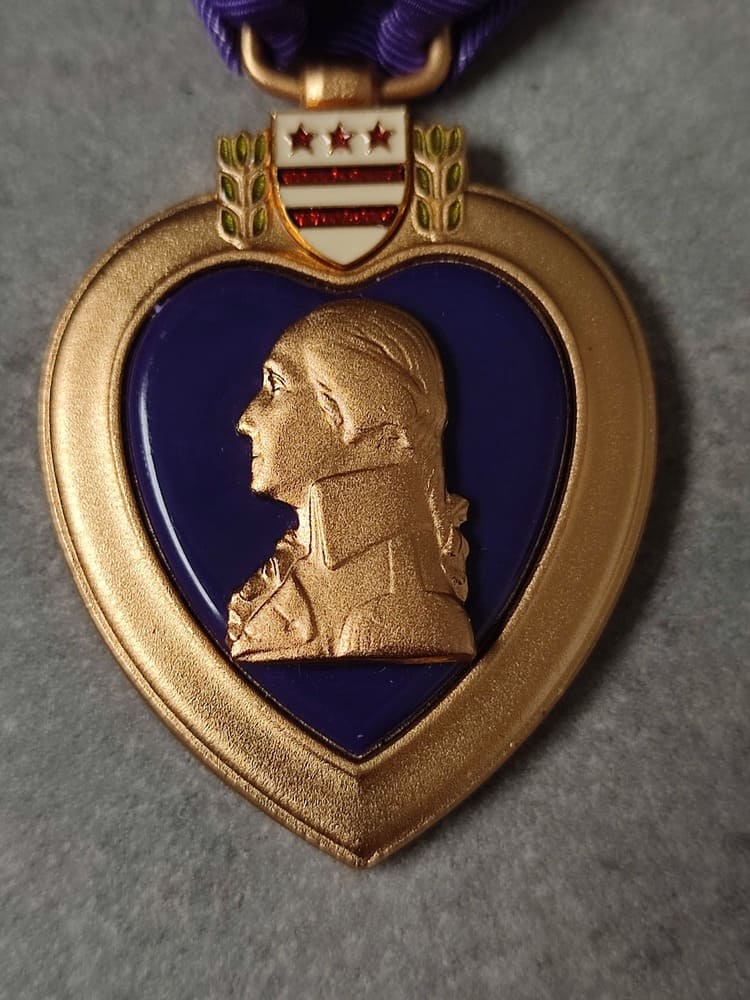
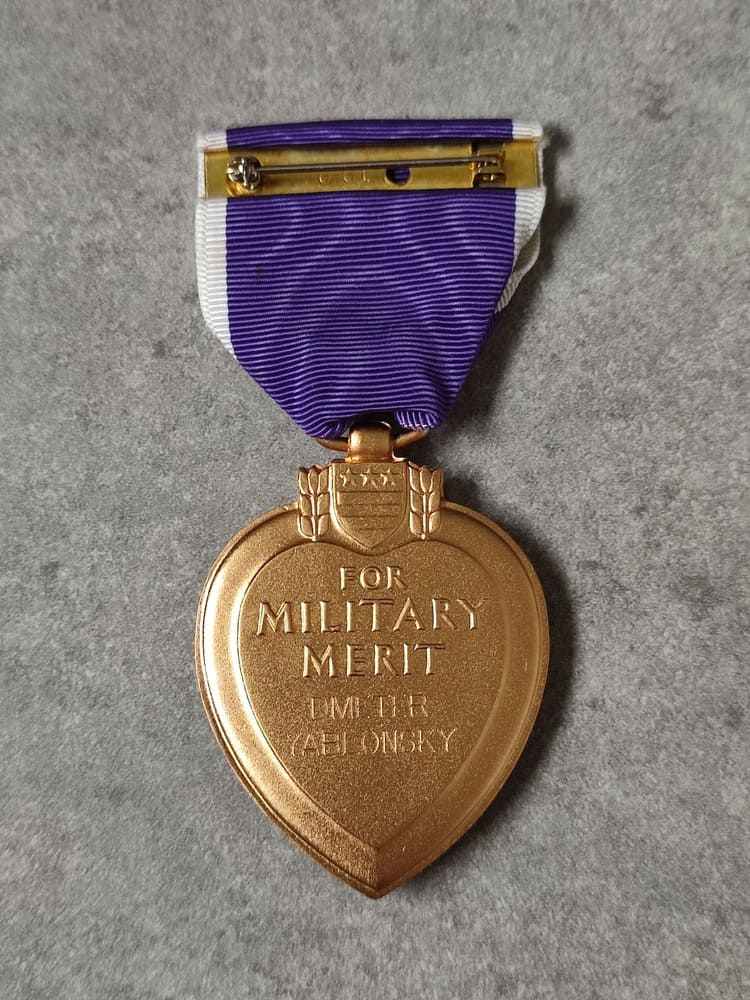
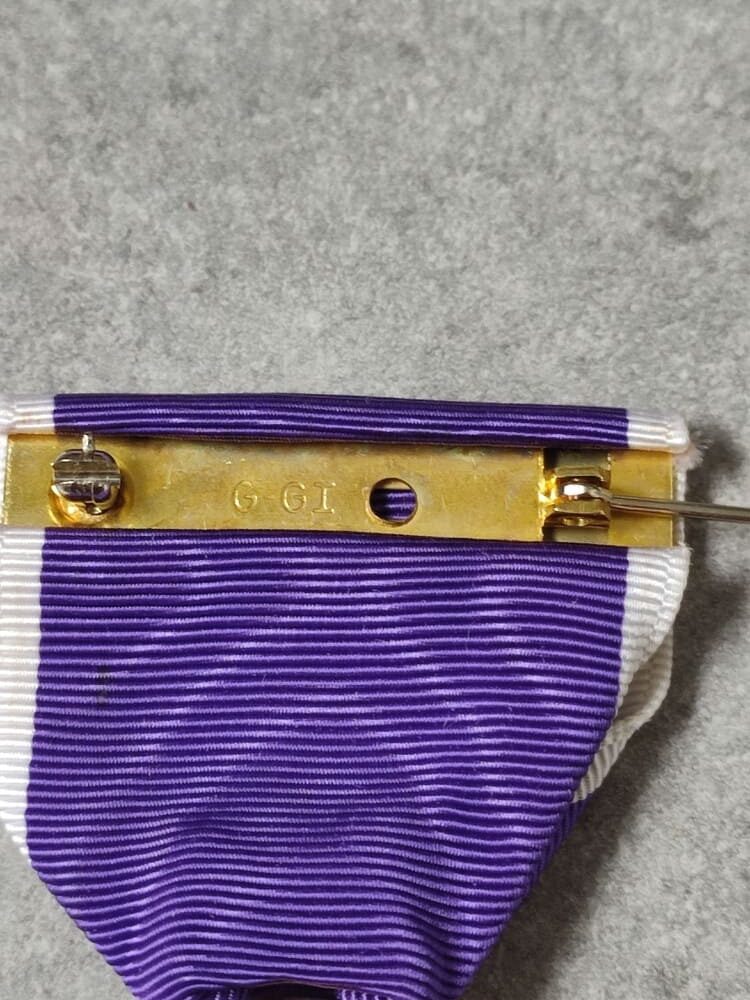
This decoration, in the shape of a purple enameled heart with a gilt border, is made of gilt metal. The profile of George Washington is featured at the center of the heart. Its upper section bears his coat of arms, represented by a shield adorned with stars and stripes. The reverse is engraved with the inscription: “For Military Merit.”
The style of manufacture, particularly the brooch and engraving style, identifies this Purple Heart as a replacement medal obtained by the veteran after the war. As was customary, recipients requesting a replacement decoration received a Purple Heart engraved according to the standards in use at the time of issuance. This example features an official engraving, most likely mechanically executed using a pantograph.
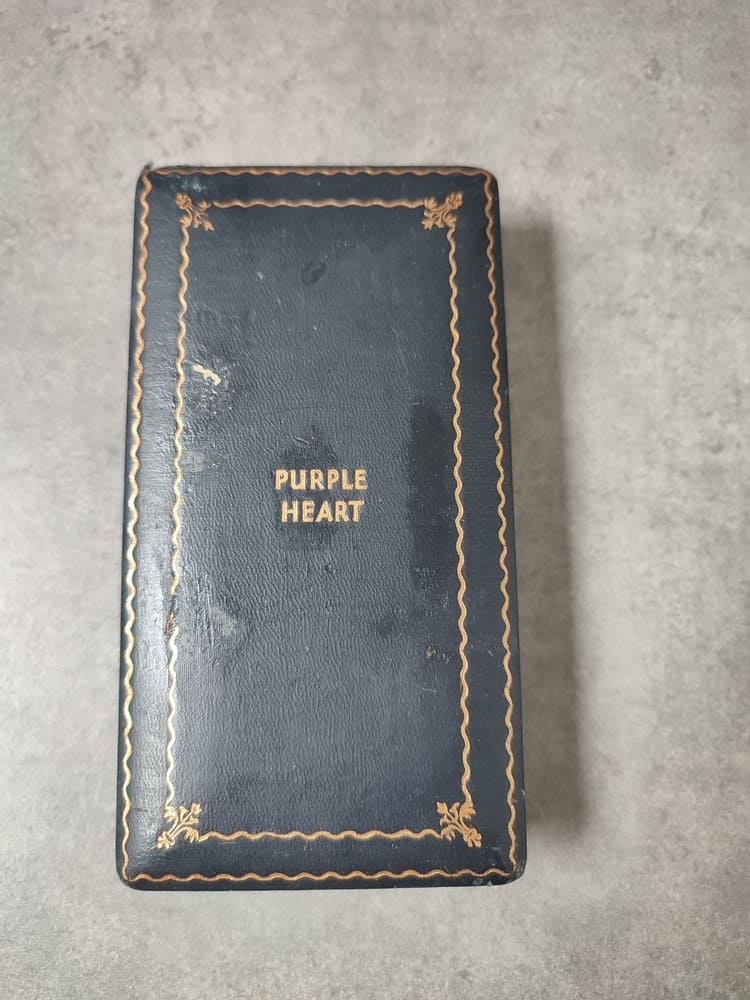
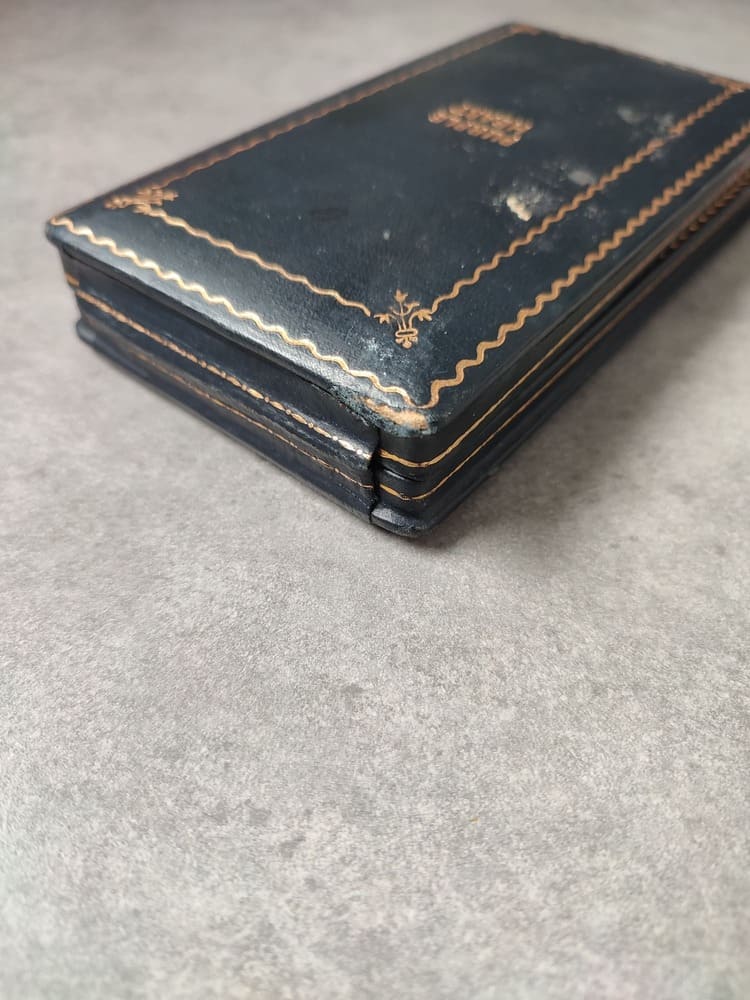
The medal is housed in its World War II-era imitation leather case. The interior is lined with cream-colored fabric: satin inside the lid and plush material in the lower section intended to hold the medal. Please note that the case produces a clicking sound when opened and closed, which does not affect its functionality.
Condition: very good for the medal; case shows signs of wear.
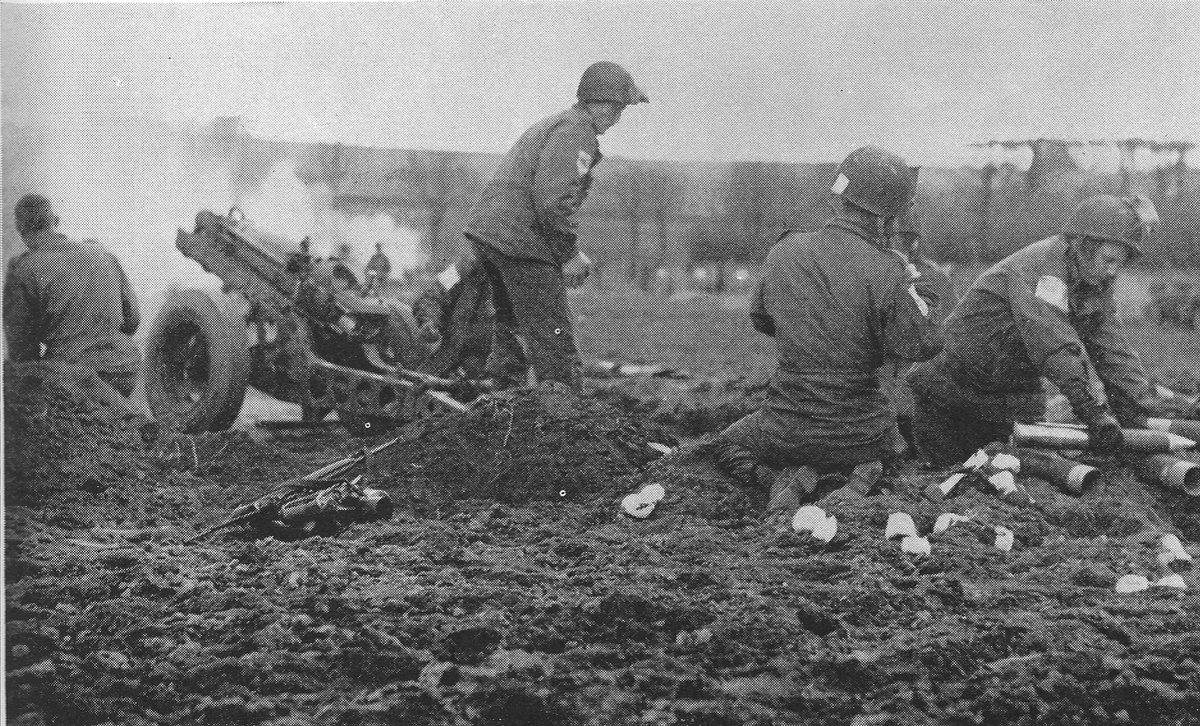
“January 25, 1945 is considered as the official date of the end of the Battle of the Bulge. The Battalion then entered in the Rhineland Campaign. This day, the battalion crossed the border and enterred in Great Dutchy of Luxembourg, in the vicinity of Hautbellain.
On January 27 or most probably 28, the battalion moved and took up positions in the area of Bockholz, Luxembourg. It was reinforced by a 155 mm howitzer Battalion. On January 29, two troops of Cavalry were attached to the 680th GFAB. The Battalion’s guns fired 1196 rounds during this fourth week of combat and T/4 Dmeter Yablonski was slightly wounded on January 30. The weather remained cold with occasional flurries.”
https://17th-airborne-memory.com/680th-gfab-history-p243632?